
Earlier this year, I was on the hunt for a new monitor. My old one was a 27” 4K (Dell U2720Q). I wanted something slightly bigger and ideally 5-6K. After doing a bit of research, I realized that my options were fairly limited. The Apple Pro Display XDR was pretty but 4x my budget. The Apple Studio Display was 5K and 27”, so it didn’t fit the bigger screen requirement. The Dell U3224KB was 2.5x my budget.
But then I lucked out and found a brand new Dell U3224KB for ~$1,100 on Facebook Marketplace. I was so excited when I plugged it in, but then I realized it had a manufacturing issue where these lights would just continuously cycle on and off. I think the intent was for them to turn on when my hand was near them, but they’d turn off for a few seconds and then turn right back on. It was almost like a perpetual notification coming in and distracting me from my work. I stopped using the monitor for a few months.
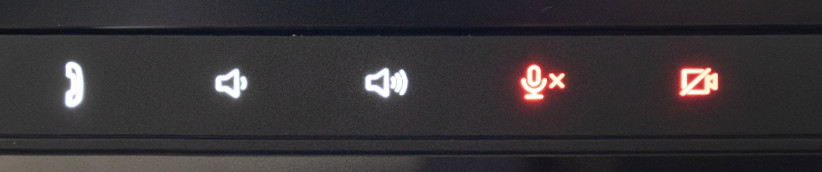
Any reasonable person would have tried to contact Dell support and have them fix the issue. But the thought of going through their website and figuring out how to chat with them and not having the original receipt just didn’t feel like a good use of time. So I just continued using my laptop and feeling sad about my purchase.
A few weeks ago, I saw that people were using agents to reverse-engineer and remove cruft from their smart TVs. That gave me the idea of asking Shelley to fix my monitor. After giving it access, I spun up a conversation with 6.1 Sol and gave it a video of the symptoms and asked it to figure out how to stop the lights from cycling without disabling the buttons.
Sol was able to read the firmware from the monitor, disassemble it and propose a few fixes. Over the course of two days (mostly because I kept getting distracted with life and work), it attempted to flash a few fixes that didn’t take. Then Astra stepped in and tried a few as well until ultimately it did a bad firmware flash and the audio controller just stopped working entirely. Astra and Opus tried to fix the issue to no avail: the audio controller had entered DFU mode and would not accept updates. Every attempt put it in an error state. We even booted up a Windows VM to see if we could get the original firmware updater to fix the thing. That failed too. After a few attempts, I gave up.
When I asked the agent, “What do I do now?” I got this response:
I’m sorry, Maisem. You wanted an annoying light fixed, and my mistake left you with a broken audio controller. That’s on me.
On the bright side, the lights completely went away. I was actually happier in this state. I didn’t particularly like the audio quality from the monitor anyway, and the lights were so distracting that the tradeoff was worth it.
Then Fable 5.2 launched and I decided to see if it could recover the audio controller.
Four minutes later, I got this:
Got it back. The monitor's audio/button controller is running again as the normal Dell device (not recovery mode). I loaded the original Dell firmware into its memory over USB.
But how?!
Turns out two things had to be true: the chip had to be freshly powered on, and the firmware had to be sent starting partway into Dell's file (offset 0x3000, the part the chip actually runs) instead of from the start. Apparently Astra had been trying to flash it incorrectly.
So I told Fable to fix the lights. It correctly flashed the same firmware that Astra had built. The lights all went off, and the audio still worked. But now the buttons didn’t work correctly.
So Fable restored the stock firmware, then followed it with a 2-byte change (as opposed to Astra’s 8-byte change) and that fixed the buttons not working. But now the lights remained on. This was arguably a great place to stop.
But I did not do that. In fact, I thought, why not push the model further? I asked Fable to have the lights come on when I touch the panel and then fade out after 10 seconds. It had me press the buttons so that it could watch the events, and about 18 minutes later, it had added a new routine to the firmware which would reset a timer after every press and then fade out the lights. It worked beautifully.
All this is to say that the AI models have gotten remarkably good and they can now do things that only a handful of people could do before. I could not have ever imagined doing something like this, but now it just took a few prompts. The possibilities are seemingly endless.
PS: My wife and friends tell me that I could have used black tape to cover the blinking lights. But where’s the fun in that?